Product Details
| Species Reactivity |
Bovine (Bos taurus; Cattle) |
| UniProt |
P24627 |
| Abbreviation |
LTF |
| Alternative Names |
GIG12; HLF2; LF; growth-inhibiting protein 12|lactoferrin|neutrophil lactoferrin|talalactoferrin |
| Range |
Request Information |
| Sensitivity |
Request Information |
| Sample Type |
Serum, Plasma, Other biological fluids |
| Detection Method |
Competitive |
| Analysis Method |
Quantitive |
| Assay Duration |
1-4.5h |
| Sample Volume |
1-200 μL |
| Detection Wavelengt |
450 nm |
Test principle
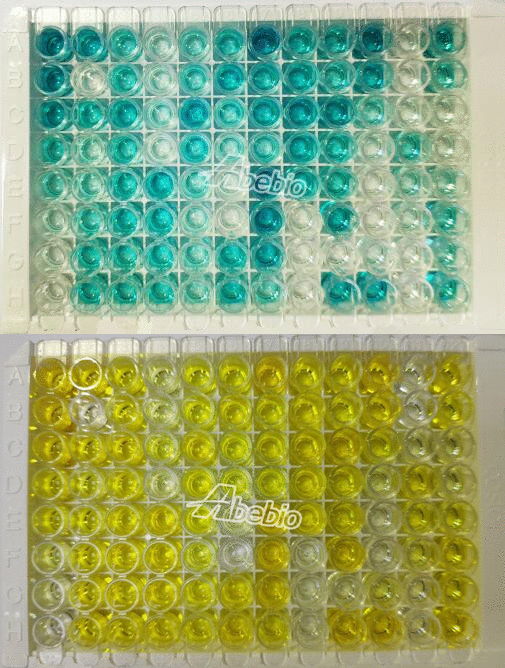
This assay employs the competitive enzyme immunoassay technique. The microtiter plate provided in this kit has been pre-coated with Bovine LTF. Samples are then added to the appropriate microtiter plate wells with a Horseradish Peroxidase (HRP)-conjugated antibody preparation specific for Bovine LTF and incubated. Then substrate solutions are added to each well. Only those wells that contain Bovine LTF and enzyme-conjugated Bovine LTF will exhibit a change in color. The enzyme-substrate reaction is terminated by the addition of a sulphuric acid solution and the color change is measured spectrophotometrically at a wavelength of 450 nm ± 2 nm.
Product Overview
LTF, a globular multifunctional protein with antimicrobial activity (bacteriocide, fungicide), is part of the innate defense, mainly at mucoses. Lactoferrin is found in milk and many mucosal secretions such as tears and saliva. Lactoferrin is also present in secondary granules of PMN and also is secreted by some acinar cells. Human colostrum has the highest concentration, followed by human milk, then cow milk.
Lactoferrin belongs to the transferrin family proteins (TF, melanotransferrin, ovotransferin, etc.). Its molecular mass is 80,000 u (80 kDa).Lactoferrin antimicrobial activity is due partly to its high affinity for Fe (ferric state). LF proteolysis produces lactoferricin, kaliocin-5 small peptides with antimicrobial activity.
Components
|
Reagents
|
Quantity
|
Reagents
|
Quantity
|
|
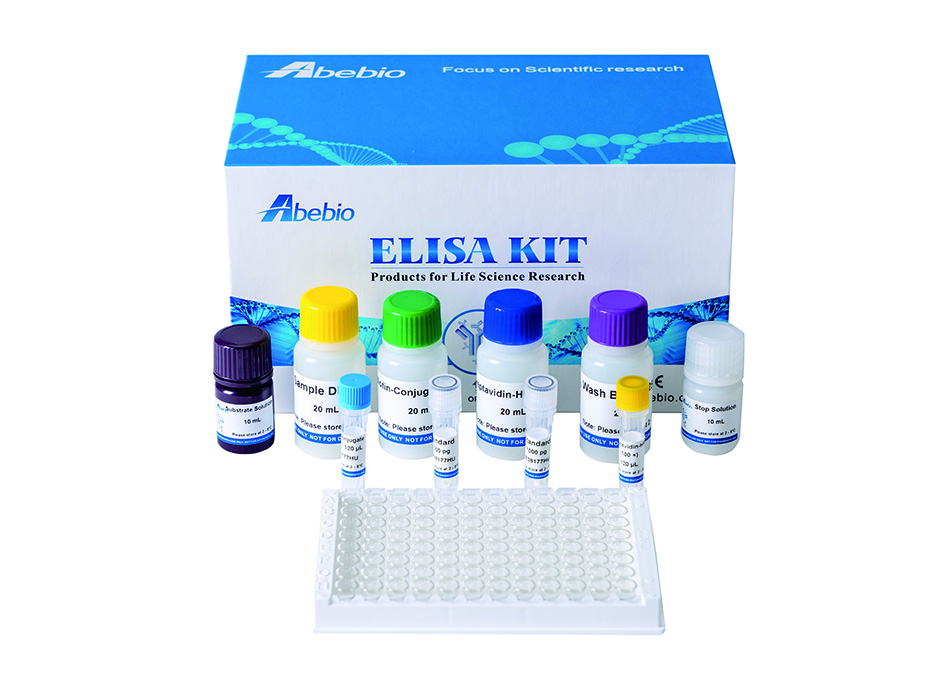
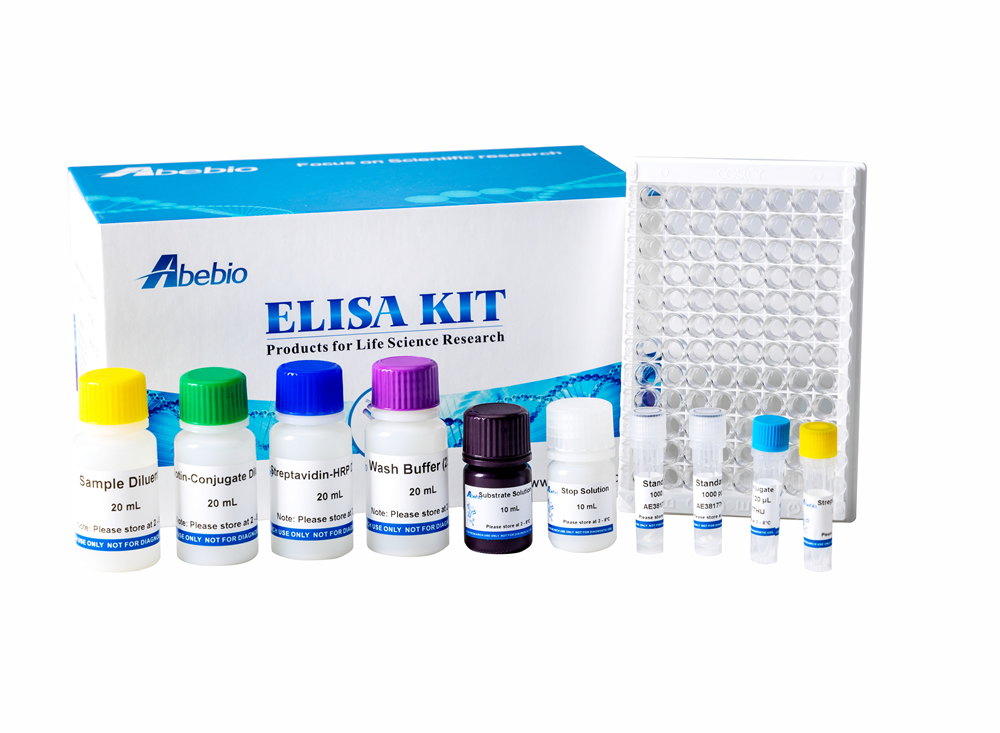
Assay plate (96 Wells)
|
1
|
Instruction manual
|
1
|
|
Standard (lyophilized)
|
2
|
Sample Diluent
|
1 x 20 mL
|
|
HRP-Conjugate (concentrate 100 x)
|
1 x 60 μL
|
HRP-Conjugate Diluent
|
1 x 6 mL
|
|
Wash Buffer (concentrate 25 x)
|
1 x 20 mL
|
Substrate Solution
|
1 x 10 mL
|
|
Stop Solution
|
1 x 6 mL
|
Adhesive Films
|
4
|
Specificity
This assay has high sensitivity and excellent specificity for detection of Bovine LTF. No significant cross-reactivity or interference between Bovine LTF and analogues was observed.
Recovery
Matrices listed below were spiked with certain level of recombinant Bovine LTF and the recovery rates were calculated by comparing the measured value to the expected amount of Bovine LTF in samples.
Precision
Intra-assay Precision (Precision within an assay)
Three samples of known concentration were tested twenty times on one plate to assess intra-assay precision.
Inter-assay Precision (Precision between assays)
Three samples of known concentration were tested in forty separate assays to assess inter-assay precision.
CV (%) = SD/meanX100
Intra-Assay: CV<8%
Inter-Assay: CV<12%
Linearity
The linearity of the kit was assayed by testing samples spiked with appropriate concentration of Bovine LTF and their serial dilutions. The results were demonstrated by the percentage of calculated concentration to the expected.
Stability
The stability of ELISA kit is determined by the loss rate of activity. The loss rate of this kit is less than 5% within the expiration date under appropriate storage condition. The loss rate was determined by accelerated thermal degradation test. Keep the kit at 37°C for 4 and 7 days, and compare O.D.values of the kit kept at 37°C with that of at recommended temperature. (referring from China Biological Products Standard, which was calculated by the Arrhenius equation. For ELISA kit, 4 days storage at 37°C can be considered as 6 months at 2 - 8°C, which means 7 days at 37°C equaling 12 months at 2 - 8°C).
Sample collection and storage
Serum: Use a serum separator tube (SST) and allow samples to clot for two hours at room temperature or overnight at 2 - 8°C before centrifugation for 15 minutes at 1000 × g. Remove serum and assay immediately or aliquot and store samples at ≤ -20°C. Avoid repeated freeze-thaw cycles. Plasma: Collect plasma using EDTA, or heparin as an anticoagulant. Centrifuge for 15 minutes at 1000 × g at 2 - 8°C within 30 minutes of collection. Assay immediately or aliquot and store samples at ≤ -20°C. Avoid repeated freeze-thaw cycles. Other biological fluids: Centrifuge samples for 20 minutes at 1000 × g. Remove particulates and assay immediately or store samples in aliquot at -20°C or -80°C. Avoid repeated freeze/thaw cycles.
Kits storage instructions
Store at 2-8°C. Please refer to Instruction Manual.



 Phone:
  E-mail:
  Address: